Director: Fred Zinnemann
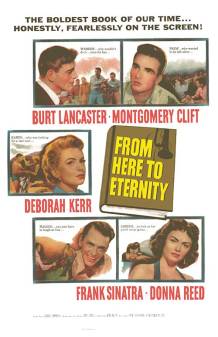
Alex – 8.3 Elliot – 8.6 IMDB 7.7 Rotten Tomatoes 8.2
Alex’s Commentary:
It has been a number of years since I had last viewed From Here to Eternity, and my perspective and perceptions obviously have changed over time. This 1953 film, set in the days leading up to December 7, 1941 Pearl Harbor, follows military men’s lives and loves. The story has numerous plot lines and develops many strong character studies. I will make a general comment regarding all of the characters in the movie as to not repeat myself as I discuss each one – it is apparent that every character has so much more behind their stories then can be fully explained in a 118-minute film. 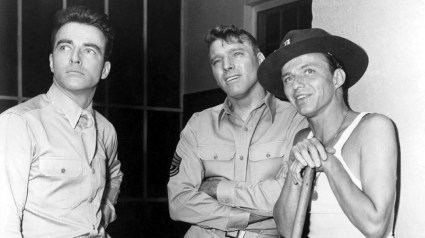 The James Jones novel was in excess of 700 pages and screenwriter, Daniel Taradash, had to decide both the key elements of the story line and character background necessary to provide a cohesive narrative. As Taradash won an Oscar for Best Screenwriting, the Academy certainly felt he succeeded. I would be remiss not to mention Fred Zinnemann, the Best Director winner, who engages the viewer throughout the film. Coupled with Oscar wins for Best Cinematography, Best Sound, Best Film Editing and nominations for Best Costume Design and Best Music, the resulting product is an atmospheric, enthralling film.
The primary storyline involves Robert E. Lee Prewitt “Pru” (played by Best Actor nominee Montgomery Clift), a soldier who transfers to a new unit because his previous unit displaced him as lead company bugler with a player he felt was inferior but had connections.  This stubborn streak continues as Pru refuses to join his new company’s boxing team which leads to a series of cruel menial assignments from guard duty, to digging unnecessary holes, to scrubbing floors, to running laps and mountain trails. He never breaks because of his love of military service which he believes is his life’s work. Montgomery Cliff plays Prewitt convincingly, but I was left wondering what made Prewitt act the way he did. Uneducated orphan, maybe?
Prewitt’s love interest is Lorene (Best Supporting Actress winner Donna Reed), a woman he meets at a “club” for military men. This is clearly not the Donna I remember as a kid watching The Donna Reed Show.
Probably the most iconic scene which the film is known for is the steamy love scene on the beach with Burt Lancaster (Sgt. Milton Warden) and Deborah Kerr (Karen Holmes); both nominated for Best Actor and Actress. I never was able to fully discern what motivated Sgt. Warden and why he declined to take the officer’s exam that may have permitted him a vehicle to marry Mrs. Holmes, the unhappily married wife of Warden’s commanding officer, Captain Dana Holmes (Philip Ober). 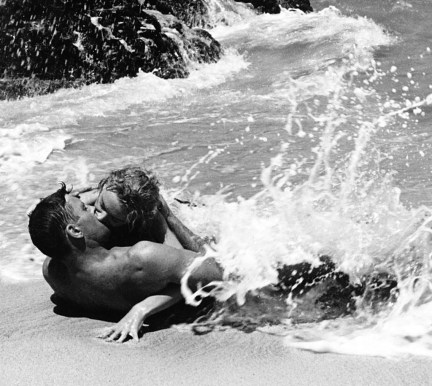 I would have to imagine that From Here to Eternity was considered somewhat shocking in the puritanical 1950’s. Themes involving adultery, consorting with prostitutes (not explicitly stated), pre-marital sex, public drunkenness, and abuse of power by a military officer are not the fare typically seen of films of this era.
Of course, the other storyline revolves around Angelo Maggio (Best Supporting Actor winner Frank Sinatra) and stockade Sgt. ‘Fatso’ Judson (Ernest Borgnine). This was an early role for Borgnine who plays a sadistic stockade commander whose personal vendetta against Maggio climaxes when Maggio is sentenced to the stockade – classic man’s inhumanity against man. We will see Borgnine in an entirely different role two films from now in Marty. This is also not the character I remember as a kid watching McHale’s Navy. The role of Maggio was a pivotal role for Sinatra who was previously was known primarily as a singer. Personally, the Maggio character didn’t resonate with me. 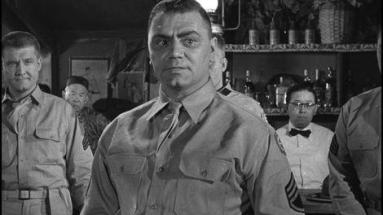 I usually do not enjoy watching characters whose primary role is to portray a drunk. Having recently watched 1946 Best Picture winner The Lost Weekend, I felt Ray Milland was a much more believable alcoholic.
In the 1947 Best Picture winner The Best Years of Our Lives, we saw the difficulties of veterans returning home after their wartime service. In From Here to Eternity, we see some of the trials and tribulations these soldiers faced during their service that manifested themselves upon their return home. If you have not seen this film, it is not one to be missed.
Elliot’s Commentary:
Our 1953 Best Picture takes viewers back to WWII-era using the incredible source material of the 1951 Novel, From Here to Eternity by James Jones. While I had not seen this particular film before, I have read the brilliant novel and was eager to see how our director, Fred Zinnemann, would interpret the material. It is not a simple feat to condense 861 pages of brilliant writing into a cohesive and comprehensive 118 minutes, however the screenwriter who adapted the novel, Daniel Taradash, did a great job given the constraints of the time period in which the film was made. T he novel is much more debaucherous in its depiction of prostitution, however this film was made during the heyday of the Motion Picture Production Code and thus these activities are largely downplayed or only mentioned through vague allusion. Besides from Here to Eternity, James Jones also wrote another novel that received the silver-screen treatment, The Thin Red Line. Terrence Malik’s 1998 film of the same name was also a terrific depiction of the brutal reality of WWII. Both novels and films are semi-autobiographical in nature and draw from Jones’ experience serving in the war.
It’s hard to imagine that the vapid spectacle of The Greatest Show on Earth could be considered in the same ballpark of this film. From Here To Eternity excels in many regards, but to see Montgomery Clift in his prime, truly is a treat for all cinephiles. This film marked the last film that Montgomery Clift would act in before his car accident while filming Raintree County. 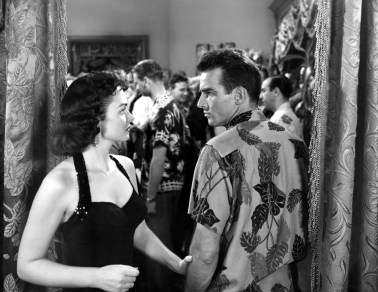 There could not have been a better actor chosen to bring the stubbornness and moxy of Robert E. Lee Pruitt (Pru) to the big screen. While an actor’s off-screen personality and mystique do not always impact their performance, the notoriously private and secluded life of Montgomery Clift fits in perfectly with Pru’s audacity and commitment to his personal morality code. Clift is often lumped into the same category as Marlon Brando and James Dean who all embodied the Hollywood outsider persona, while revolutionizing the industry with raw talent.
Additionally, there can not be enough said about the surprisingly endearing performance of Frank Sinatra as Angelo Maggio. While today, “The Chairman of the Board” Frank Sinatra, is a household name, 1953 marked a period of decline for the swooner. With his records not selling and his inability to fill concert halls anymore, it looked like Frank’s star was fading fast. He wasn’t the first choice for this role and there are rumors that Sinatra’s mob connections helped him get a part in this film. The famous scene from The Godfather where the movie producer wakes to find his prized horse’s head in his bed is said to be inspired by some of the dealings that led to Frank being cast in this film. 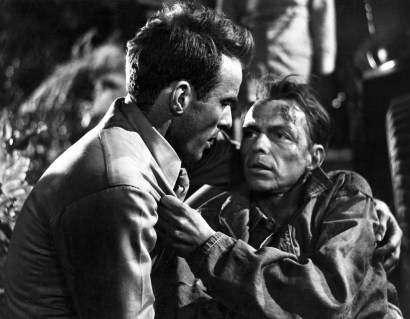 Regardless of the rumors, Frank’s performance was enough to put him back on the map. His comedic timing and brash persona are incredibly captivating, and he rightfully earned the best supporting actor Oscar that he was awarded for the role. His character’s chutzpah in the face of adversity showed off the actor’s incredible range from light-hearted to emotional heart-breaking scenes. Without providing too much of a spoiler for this 50 year-old classic, Maggio’s final scene in the film is one of the most memorable scenes that we have viewed in our journey through film history.
The actor who is the glue that holds the entire film together is Burt Lancaster. Lancaster’s performance as the steady and intrepid Sgt. Milton Warden provides a terrific juxtaposition against the brash Maggio and the stubborn Pru. While Pru is receiving the “treatment” for not joining the squad boxing team, the Sergeant provides a bit of compassion and perspective that helps Pru temporarily through some of the company in-fighting.  While the Sergeant does not always take the moral high road, especially in light of his affair with the Captain’s wife, Donna, he still remains a symbol of goodness in the corrupt bureaucratic company. Their scene with the Sergeant and Donna on the beach together is one of the more enduring images from the film and encapsulates the ability of the film to cover all ends of the emotional spectrum.
There are moments in the film where both Pru and Maggio’s treatment is kafkaesque as their superiors use the system to bully the two soldiers into compliance. The moment in time displayed in the film is clouded with the ominous presence of historical dramatic irony. As we glimpse this version of life at the Hawaiian army base in the closing months of 1941, the stakes for the characters seem so high in the moment but ultimately do not matter given the scale of history’s tide. 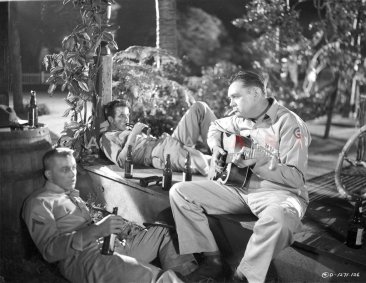 While the film is ultimately a character study with limited discussion of the global conflict of WWII, as the characters’ individual stories begin to resolve themselves, they are faced with “a day that will live in infamy” as FDR described it. The attack on Pearl Harbor makes the stakes of participation in a boxing tournament seem so insignificant, but that is the stark contrast we are faced with.
Overall, I thoroughly enjoyed this film. Besides the stellar production-value and terrific performances from our leads, the plot of this film drives an interesting, rarely-seen depiction of military life that is worth seeking out. The film contains romantic, dramatic, comedic, and action-packed elements that provide something for every film-enthusiast.

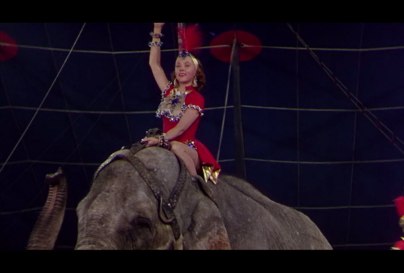
 The movie felt more like a documentary of circus life than the engaging drama which it tried to be. The color cinematography and costuming were well done but the cast of established actors could not salvage the weak storyline.
 My second theory is that a very strong group of competing films split the voting enabling a lesser film to emerge victorious. This list of films includes four motion pictures that are considered classics and I believe are far superior to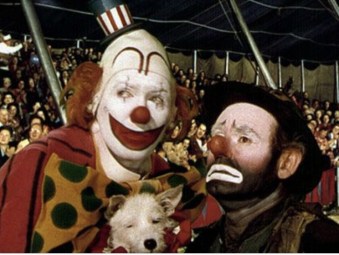
 The foil to Heston’s character is Holly (
 He only had so much to work with given how cheesy the script and storyline were. Also appearing in minor roles were
 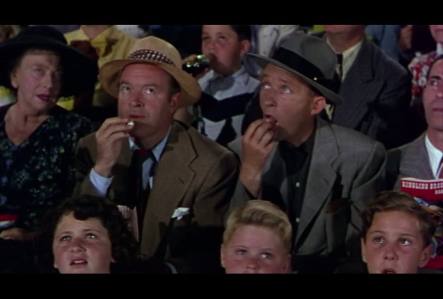 The film also provides behind-the-scenes coverage of moments that the average circus-goer would never get to see such as the circus train, the rigging and set-up of the iconic circus tent, and the practice routines for the various acts as they prepare for the night’s performance. Even moments where Charlton Heston is going through a line-up of elephants and prescribing remedies for elephant-illness such as gin and ginger, are intriguing glimpses of a different world not often glimpsed by the public. As I watched some of the more harrowing trapeze stunts, I found myself on the edge of my seat hoping that we wouldn’t see an accident. When it comes to world building Cecil B. Demille excels at bringing the grandeur of the circus to life, and depicting the magical place of wonderment and danger that delights adults and children alike.
  of blackface and jokes at the expense of the obese and dwarves that are not endearing in a modern context. While I don’t have moral qualms with the concept of the circus in general, there have always been questions about the treatment of animals in the production of these spectacles. Even the the 2017
  Not all of the best picture winners deserve to be remembered in perpetuity, and this film in particular is deserving of its place near the bottom of all best picture winners. Due to the time period, this film was produced during the heyday of the Hollywood Blacklist and McCarthyism and thus we are left with the result of what happens when Hollywood plays it safe. This commercial for the circus was successful in making me want to see a Cirque du Soleil show in the near future, but not much else. See it if you want to laugh at some bad acting, or if you really like dated portrayals of trapeze acts.
 There are also unanswered questions such as what happened to the heiress/art patron, Milo Roberts (played by
 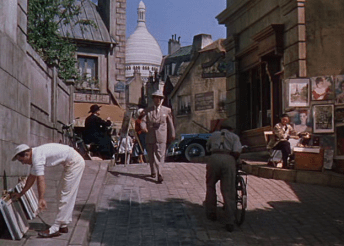 The film was produced in MGM Technicolor which director
  and obviously classically trained. She was also unbelievably flexible!! I would be remiss not to mention
  Minnelli is a legend in the movie musical community, and his work on film classics like
 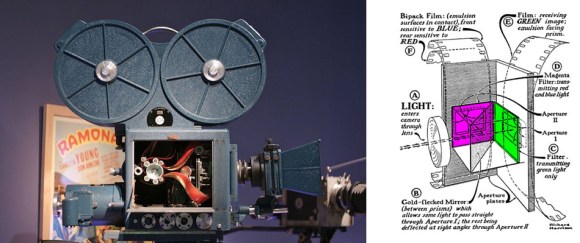 Without getting too scientific, the
  Vincente Minnelli’s success with Meet Me in St. Louis helped him secure the authorization for the use of Technicolor for the production of An American in Paris. Additionally, based on Minnelli’s stylistic choices, the film would not have been as visually spectacular if the technique was not utilized.
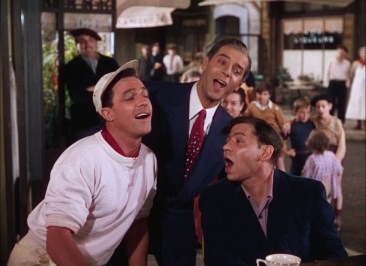 there is a clear narrative structure in the composition that is exciting and interesting even to my untrained ear. George was not the only Gershwin who lent his with musical talents to Hollywood for this film, George’s brother,
 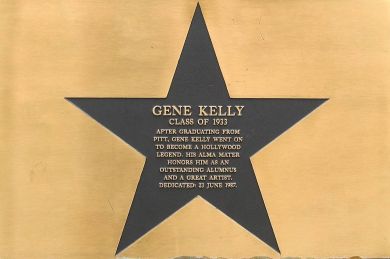 real talent shines through his dancing ability. Kelly not only danced in An American in Paris, but as was the case in all his movie musicals, he choreographed all his dance numbers and assisted on many of the other numbers throughout the film. Gene Kelly was also fluent in French and his linguistic skills are reflected throughout the film.
 Kelly’s character, Jerry Mulligan, is a hero to many of the kid’s in his neighborhood in Paris, making friends by bribing them with bubble gum. His first solo number in the movie, “I Got Rhythm” is one of the big hits of the film and my personal favorite. His singing is sweet and effortless, but the tap number he breaks into halfway through the song is really what takes the viewers breath away.
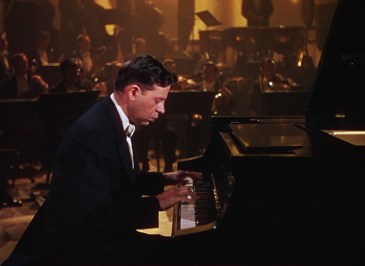 Minnelli takes an interesting stylistic choice to show the actor playing Adam Cook, Oscar Levant, play every member of an entire symphony for a momentous instrumental number. The visually stunning scene coupled with its bombastic score is one of the strongest moments of the film.
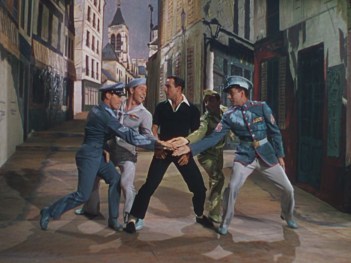 abstract set with an intentionally disorienting dance number, reemphasizes the strength of this film. The sensational finale with an almost uninterrupted 17-minute dance number is incredible. The set design takes us from painting to painting, with each successive scene taking the audience from loss, to hope, to happiness as the story is resolved abstractly in bright colorful mood-indicative lighting. While we do have a joyful embrace as Jerry and Lise end up together, it almost seems superfluous after the phenomenal dance number that is one of the most spectacular that I have ever seen in film.
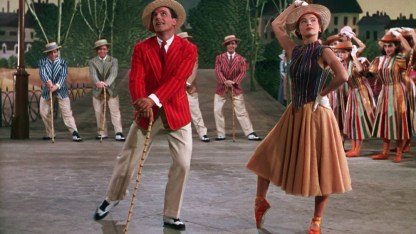 I can’t help but be charmed by watching Gene Kelly tap dance, and the closing number combining men tap-dancing with women led by Leslie Caron dancing on point is truly amazing. It’s hard to compare the cerebral and psychological All About Eve which won last year, with this film which thrives on its visual stimulation. Honestly, I would have preferred
  The Kindler Oscar Chronicles