Director: Lewis Mileston

Alex – 8.3 Elliot –8.8 IMDB 8.1 Rotten Tomatoes 8.6
Alex’s Commentary:
All Quiet on the Western Front begins with a quote from author Erich Maria Remarque “This [film] is to be neither an accusation nor a confession, and least of all an adventure, for death is not an adventure to those who stand face to face with it. It will try simply to tell of a generation of men who, even though they may have escaped shells, were destroyed by the war.”
Two of the first three Best Picture Academy Award winners are films about war. However, whereas Wings portrayed the conscription of young men as a proud, noble, patriotic service benefiting the greater good, All Quiet on the Western Front paints a much dimmer picture of the harsh realities and futility of warfare.
The story is narrated by Paul Bäumer, a young man of nineteen who fights in the German army on the French front in World War I. Paul and several of his friends from school join the army voluntarily after listening to the stirring patriotic speeches of their high school teacher. 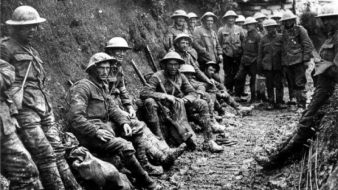 But after experiencing a brutal boot camp and the unimaginable brutality of life on the front, Paul and his friends have realized that the ideals of nationalism and patriotism for which they enlisted are simply empty clichés. They no longer believe that war is glorious or honorable, and they live in constant physical terror.
The film has a stark and cold feel to its imagery. I am unaware whether this is by the design of Director Lewis Mileston or simply a reflection of the then current cinematic technology; regardless, it is highly effective in portraying Remarque’s message.
The present day relevance of the film’s anti-war message is remarkable. Although the term post traumatic stress syndrome was unknown at the time, many characters appear to display its symptoms. Paul sees his friends die one after another often suffering slow lingering deaths both from wounds inflicted on the battlefield, as well as from gangrene caused by amputations at understaffed and overworked field hospitals. Paul, when home on leave, cannot discuss the carnage, brutality and senselessness of his battlefield experiences with anyone. He even feels compelled to cut his leave short to return to his comrades as they are the only people he can now relate to.
Remarque also challenges the notion that one should blindly accept the authority and wisdom of those in power whether it is parents, teachers, business leaders or higher ranking soldiers simply because of their position – a rather radical concept even in today’s society.
Examples include teachers instructing students to drop out of school to fight in a war because it is their duty and the “right” thing to do. Young men are instructed to listen to their fathers, not their mothers, because no mother would want her son to go to war. One scene shows Paul being asked by a group of successful businessman debating over a map of Europe about the best avenue to attack the enemy. Paul realizes these men have no conception about warfare, the capabilities and condition of the troops, or the better equipped, superior enemy force, and therefore elects not to respond.
I particularly liked the dialogue where one soldier suggests that national leaders should go to a roped off field in their underwear bearing clubs and the country’s leaders that emerge victorious win the war. Seems like a sensible solution to me!
On a different note, Elliot and I have discovered that every movie we are planning to view is available through our local Carnegie Library system. Please support your local library.
Elliot’s Commentary:
The Lewis Mileston classic, All Quiet on the Western Front , is really the first one of the films that we have seen thus far that I would dub a classic of American cinema. From the stunning long shots to the lengthy action scenes, the movie shows the stunning leap in the technology of sound films from its unpolished predecessor, The Broadway Melody. This 1930 classic is also the first film to embody the melancholy of America after 1929’s Stock Market Crash. Rather than focusing on a particular main character, the film is also the first ensemble piece to win the award. Delving into the psychological conditions of soldiers in the trenches in WWI, the futility of world war, as well as the conditions on the home front, the film really provides a snap shot of German culture as it comes to terms with the repercussions of being involved in such an all encompassing war. It is particularly fascinating to me that the film is made from a German perspective instead of an American one. While this more closely mirrors the German book of the same name that provided its source material, it was also released only 12 years after a war that had decimated America. In my personal opinion, this was a method of commenting on the state of the Depression-era America without having to deal with the political connotations of directly tackling the social problems that existed in America at this time. The scenes of Germany when a soldier returns to the homeland on leave especially resemble a depression-era America. The soldier had to bring home food from the front to feed his starving family, since the majority of the country’s food was being shipped to the front to feed soldiers.
One of my favorite shots in the film is a long shot through a window looking out at a shell attack occurring as the new recruits arrive to the front. This window symbolizes the divide of a country watching the war from afar compared to having the war fought on home soil likeAmerica’s allies and enemies experienced. The film also had a glaring anti-war message that was truly indicative of a world struggling to recover from the overall economic and emotional devastation that the war inflicted. There were moments when the soldiers were sitting by a lake chatting about the very reason they were fighting and not many could really answer the reason why, or whether they should have any animosity towards French and British soldiers that they had never met before.  One of the most emotionally moving moments in the film came after a German had just stabbed a French man as they both hid from incoming shells in the same bunker. The German confesses that he had nothing against the man, and they were both just humans obeying orders from their respective governments. After the French man dies in the trench, the German looks through his things and discovers a picture of the French man’s wife and son which strikes an emotional chord with him. As he sits in the trench with the corpse of the man he just killed, it was hard for him to differentiate the man’s humanity from the previously perceived enemy that he had stabbed just 12 hours before.
Overall, the film was spectacular for the era in which it was created. Even compared to the very enjoyable, Wings, produced only two years earlier, All Quiet on the Western Front far surpasses its two predecessors in technology, cinematography, storyline, acting and every aspect of filmmaking. For this film to be made at this time in history is a truly remarkable feat and places it easily within the category of the classic American film lexicon.
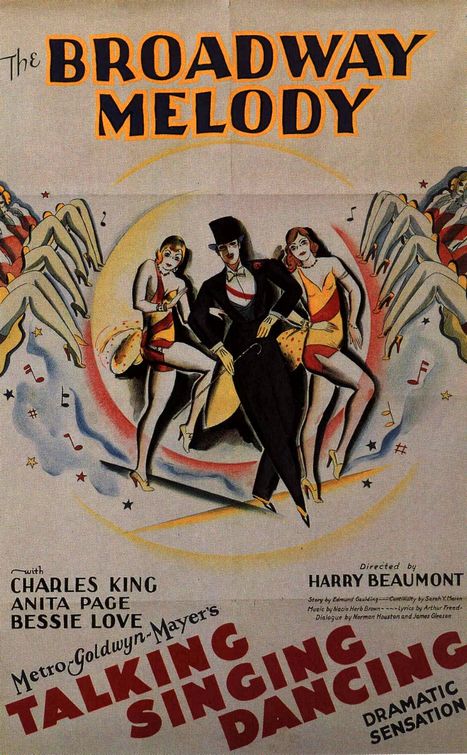
 The story of two sisters trying to break into showbiz seems rather pedestrian but maybe in its era it was a fresher story. There were a number of good musical scenes especially if you like good tap dancing and surprisingly elaborate costuming. I was familiar with maybe two songs and in general am not a big fan of songs from musicals pre-1940 (at least I don’t think so – maybe this will change). I do enjoy musicals and as much as I may try to critique The Broadway Melody like a moviegoer from the 1920’s, it’s difficult to forget 80+ years of newer musical productions. I’m not sure why the technical production of
 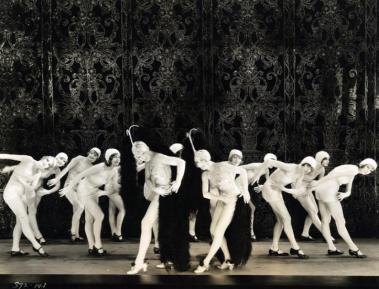 Let’s be clear however, I am not a musical naysayer. In fact, I rather enjoy musicals. However, the brand of musicals made in the 1920’s lacked the warmth and depth of the pioneering Rodgers and Hammerstein works. Even the sweet musical number “You Were Meant For Me,” fell short without any significant big uptempo bit to bring the show home. I can applaud a couple of really spectacular dance numbers, especially a scene where one intrepid dancer somehow tap dances while on point. The sheer physicality of the act still amazes me.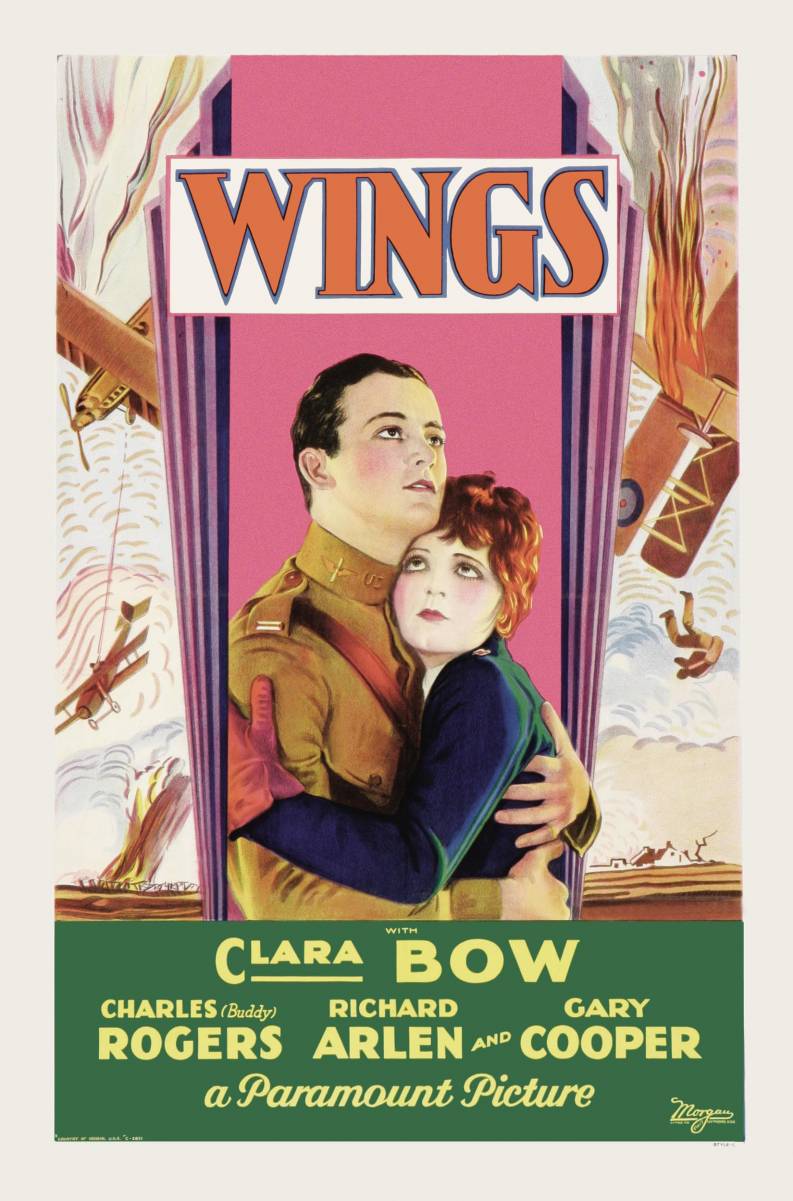
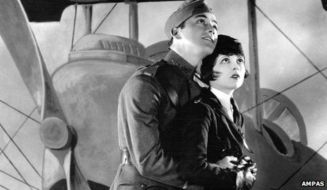 I was amazed at the technical quality of the production especially the dogfight scenes. The acting was solid and I guess one should expect expressive faces and mannerisms from silent film stars. Even got to see a brief scene with a young
 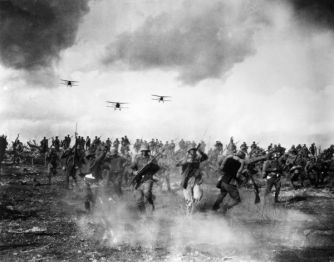 The score also provided a decisively driving force in the film, even though we did hear the remastered 6.1 digital sound on our blu-ray copy, it still maintained the original score. The dog fights in the film were truly ahead of their time and the limits the filmmakers pushed their dated technology to really deserve praise and admiration. There were even parts of the film where plane crashes had been colored by individually tinting each individual frame, providing a particularly stunning visual contrast to the monotony of black and white visuals.
 The Kindler Oscar Chronicles