Director: Frank Capra

Alex – 9.0 Elliot – 9.0 IMDB 8.3 Rotten Tomatoes 8.9
Alex’s Commentary:
I love It Happened One Night. Of the films we have seen, this is the first film that I have seen on numerous occasions (although this is the first time on a large screen HD television). In fact, I never previous appreciated the beautiful cinematography. The elegant black and white scenes reminded me of Ansel Adams photographs. There are scenes of moonlight and daylight, urban city and rural county, people at parties and people on buses, and lots of rain. I also never realized how attractive Claudette Colbert was. Especially with the moonlight streaming onto her face through a cabin window as she laid thinking of Peter Warne (Clark Gable) on the other side of the blanket separating their beds.
The story has been retold in various guises through films of every decade. The spoiled rich girl, Ellie Andrews, escapes from her millionaire father (Walter Connolly) who wants to stop her from marrying a worthless playboy, only to be befriended by out-of-work newspaper man, Peter Warne. Naturally, their initial icy relationship blossoms into love as they travel together toNew York. The movie is often considered the first screwball romantic comedy to win the Oscar for best picture.
The story and the acting are first-rate. It Happened One Night was the first film to win the “big five” Academy Awards, Best Picture, Best Actor (Clark Gable), Best Actress (Claudette Colbert), Best Director (Frank Capra) and Best Screenplay (Robert Riskin). The story is warm and engaging. The characters are wonderfully detailed and developed. Even the minor characters are memorable from the fast taking bus rider, Shapeley (Roscoe Karns), to Ellie’s father, to the cottage owners, to the thieving highway man. Although the film is a comedy, it is still a depression era movie that does an excellent job of depicting multiple facets of American life in the 1930’s: both from the perspective of the wealthy, King Westley arriving to his wedding in an autogyro, to those who must chose between spending money on a bus ticket versus eating a meal.
It Happened One Night is a delightful timeless film that all lovers of romantic comedies should include on their must-see list.
Elliot’s Commentary:
I don’t think it is that much of a stretch to say that It Happened One Night is my favorite Oscar Winner that we’ve seen thus far. First, let me start with two words that sum up my feelings about the film: Clark Gable. Directed by the very talented Frank Capra, of It’s A Wonderful Life and Mr. Smith Goes to Washington fame among countless other classics, It Happened One Night is the first glimpse we have had of the Golden Age of Hollywood. It is hard to do anything but gush in response to this film, but I will try to maintain some sense of decorum in this commentary. From the classic backlighting, to the acting, to the production value, to the story, there is something timeless about this film that we haven’t really witnessed thus far in our journey through the best picture winners. Even the sound quality and sound mixing make this picture a standout in comparison to its more dated predecessors.
An aspect of films like It Happened One Night that one has to take into account, is the fact that what may seem cliché to us now was still an original plot motif when the film was made. The beautiful Claudette Colbert plays a spoiled rich girl, who runs away from her overbearing father to taste freedom for the first time. While originally Ellen Andrews (Colbert) flees her father to join her new husband, it quickly becomes apparent that she did not marry “King” Westley for love. However, Ms. Andrews faces many trials and tribulations as the sheltered debutante attempts to take to the lengthy voyage fromMiami toNew York. Luckily for both Andrews and viewers alike, the suave newspaper man Peter Warne (Clark Gable) is there to serve as Sherpa for her life-changing journey. Convinced that the overnight bus fromMiami toNew York won’t leave without her, Ellen takes her time during a brief break only to discover no bus. Suddenly she is met with the stunning realization that the world doesn’t revolve around her. Peter Warne however, noticed that she had left her ticket on the bus and was waiting to greet the shocked Ellen Andrews.
Through their tumultuous journey together that includes their luggage being stolen, private investigators searching for the missing heiress, being broke and hungry, forging streams, sleeping in hay bales, stealing cars, as well as a myriad of other instances of lovable shenanigans, they discovered that they could quite possibly be in love with each other.  My favorite scene in the film is one in which Clark Gable shows Colbert how to hitchhike. He goes on a long spiel illustrating the three different kinds of gesticulations he uses to hail passing cars, and then attempts to demonstrate them. As he furiously goes through the three options, he fails to elicit a single response from the passing stream of automobiles. Colbert then steps up to the plate, and asks for a try. Gable relents to prove to her how difficult the task actually can be. Colbert then hikes up her dress revealing an amount of leg that was the 1930’s equivalent of a Janet Jackson super bowl performance, and immediately gets them a ride.
While I could write 5000 words on why I love this movie, I think it would be best for me to just endorse that anybody who enjoys classic films, romantic comedies, or just film in general should really see the film It Happened One Night. *Spoiler Alert* Runaway Bride totally copied its premise from a scene at the end of this film, and I would take Claudette Colbert over Julia Roberts any day.

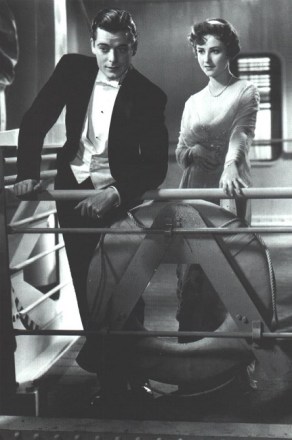 Along this journey tracing the lives of two British families of differing financial means, we experience the death of Queen Victoria, the sinking of the Titanic, the extravagance of roaring 20’s, and the rise of philosophies encompassing socialism, communism, Sigmund Freud, and religious and anti-religious thought. A particularly well done scene in the film shows a couple on their honeymoon cruise discussing life, their future and musing what if tonight would be their last. As they retire to their quarters, the shocking image of a lifesaver with the inscription Titanic is visible in the frame.
 Through the eyes of the family, we are able to gather an accurate portrayal of the hardships and pains of the English public during this era. While looking at this posterity it is also hard to forget the fact that at the time when this film was created,Englandhad yet to experience its most trying test in the form of WWII which occurred just 6 years after the film was made.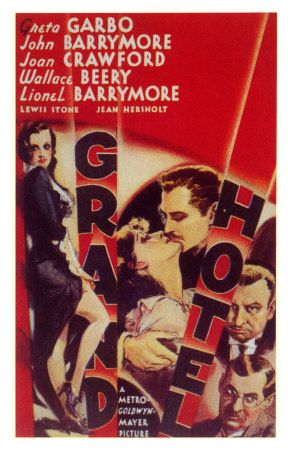
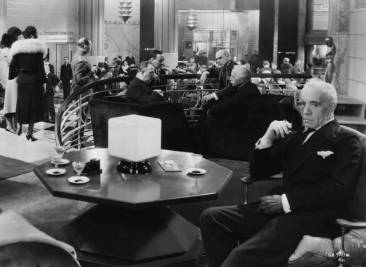 Perhaps what brought the characters to this place is not as important as what their current circumstance appears to be and how each character deals with adversity. To me, the movie expresses certain truisms – one, good people faced with grim financial prospects will often be drawn to do bad things (such as theft or adultery); two, wealthy people faced with the potential loss of wealth will often do bad things (such as lying and murder); three, wealthy and successful people can still suffer from depression despite material comforts; and four, people facing imminent death can enjoy their remaining days because they are freed from the burdens of responsibility and conformity. I can’t help but feel the screenwriter was sending a message to all of those affected by the Great Depression that was still devastating the American filmgoer. I do not know whether the message that wealth does not lead to happiness could make a depression-era filmgoer feel better, but that’s the impression the writer appears to convey. If all this sounds confusing, it is because it is. Unless the viewer pays close attention to the dialogue, the interwoven vignettes would become increasingly difficult to follow. There were some interesting plot twists but I did not feel an emotional connection with any of the characters.
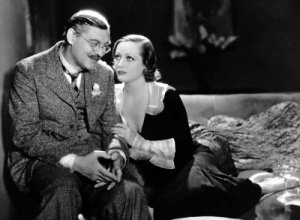 Interestingly enough, this was actually the second film that we have viewed thus far to take place in Germany, a setting that will become infinitely less popular after the beginning of the United States involvement in WWII starting in 1941. While it is hard to compare the technical aspects of Grand Hotel to the more grandiose productions of
  The Kindler Oscar Chronicles